Cold Chain Optimization: A Thermodynamic Approach
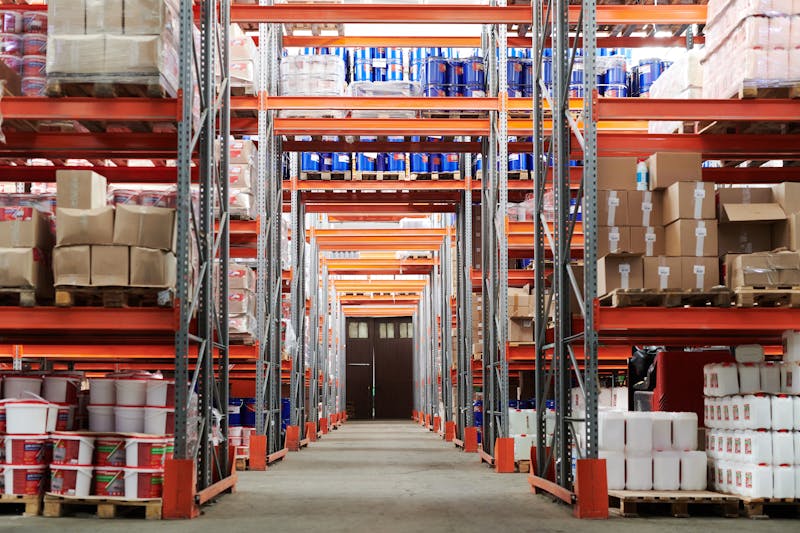
Efficiency in thermal preservation depends on precise control of thermodynamic principles. We explore how heat transfer modeling redefines industrial cold management.
The cold chain is not simply about keeping products at a low temperature; it is a dynamic system governed by the laws of thermodynamics. Every link, from production to the end consumer, represents an energy exchange that, if not managed precisely, leads to significant losses and compromises quality. The first law, the conservation of energy, forces us to account for all energy introduced into the system (electrical, mechanical) and its final destination: actual cooling, losses due to poor insulation, or compressor work.
The second law, dealing with entropy, is even more critical in this context. It tells us that heat flows spontaneously from hot bodies to cold ones, never the other way around without an external input of work. Refrigeration systems are machines that fight against this natural principle, using refrigerants and compression cycles to 'pump' heat from the inside of a cold chamber to the warmer outside. The efficiency of this pumping, measured by the coefficient of performance (COP), is the heart of energy efficiency.
A common mistake is to focus solely on the target temperature. However, key thermodynamic parameters include refrigerant pressure, its enthalpy, and its entropy at different points in the cycle. A pressure-enthalpy diagram (P-h diagram) becomes the fundamental tool for engineers. By analyzing this diagram, inefficiencies can be identified: insufficient subcooling, excessive superheating, or compression away from the optimal point, each of which reduces the COP and increases electrical consumption.
Heat transfer occurs through three mechanisms: conduction, convection, and radiation. In a cold storage room, conduction through the insulation walls must be minimized. Convection, both natural and forced, determines how cold air uniformly envelops the products. Poor airflow design creates 'hot spots' where the temperature is higher, accelerating degradation. Radiation, although less significant at low temperatures, can be relevant in chambers with large glazed surfaces or exposed to indirect sunlight.
Computational Fluid Dynamics (CFD) modeling has revolutionized design. It allows for 3D simulation of airflow, temperature gradients, and real-time heat transfer inside a warehouse or transport container. These simulations, based on thermodynamic equations, allow for optimizing the location of evaporators, load arrangement, and insulation thickness before building a single wall, saving long-term operating costs.
Finally, sustainability demands looking beyond COP. The concept of 'exergy' or useful energy helps us assess the quality of the energy used. A system may have a decent COP but be destroying a large amount of exergy due to thermodynamic irreversibilities (friction, temperature mixing). Exergy optimization seeks to minimize this destruction, which often leads to more innovative designs, such as the use of refrigerant cascades or the integration of residual cold sources from other industrial processes, closing the energy cycle in a smarter way.